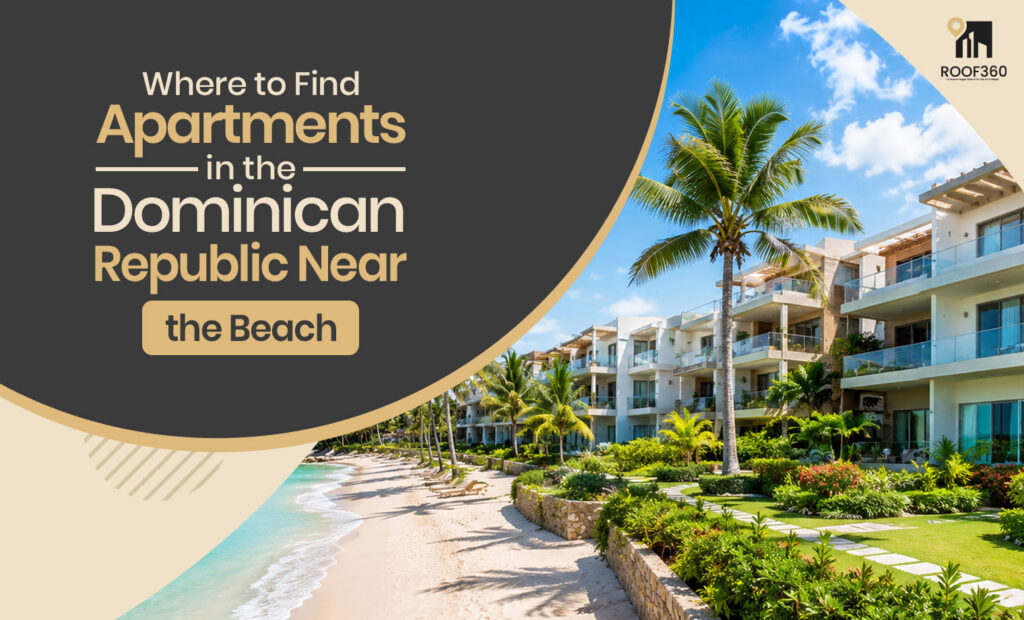
If you are wondering where to find apartments near the beach in the Dominican Republic, the answer depends on how you plan to use the place. A buyer who wants rental income, a retiree who wants a quiet coastal town, and a family that wants the beach near the capital will all end up in different areas.
This guide compares the main beach areas, shows typical asking prices and rents, and explains what to check before you buy or sign a lease. It also covers what foreign buyers need to know, because many of the people looking at coastal apartments here live abroad.
Beach Apartment Prices by Area
Prices change a lot from one coast to another, and even from one street to the next. The figures below give you a starting point for your budget.
| Area | Typical Asking Price to Buy* | Example Monthly Rent* | Best For |
|---|---|---|---|
| Punta Cana and Bávaro | 1-bed from about US$120k to 300k, by community | Varies by season and community | Rental demand and resort amenities |
| Las Terrenas | Beachfront studios from about US$189k | 2-bed house near the beach about US$1,300 | Walkable town life |
| Sosúa and Cabarete | Often below Punta Cana levels | US$400 to 750 furnished, 2-bed about US$550 | Expat community and water sports |
| Bayahibe | Studios from about US$98k, 1-bed from about US$133k | Varies by season | A calmer Caribbean pace |
How Close to the Beach Do You Really Need to Be?
“Near the beach” can mean very different things in a listing. A beachfront unit, an apartment five minutes away on foot, and one that needs a 12-minute drive can all show up in the same search, and each one changes the price, the noise, and the rental appeal.
| Distance | Best For | Check Carefully |
|---|---|---|
| Beachfront | Premium lifestyle, short-term rentals, resale appeal | HOA fees, insurance, salt damage, erosion |
| 5 to 10 minutes on foot | Rental demand and better value | The actual walking route, lighting, and safety at night |
| 10 to 15 minutes by car | Lower prices, larger units, quieter living | Transport costs and resale demand |
| Resort community | Security, managed amenities, rental programs | Community rules, fees, and developer track record |
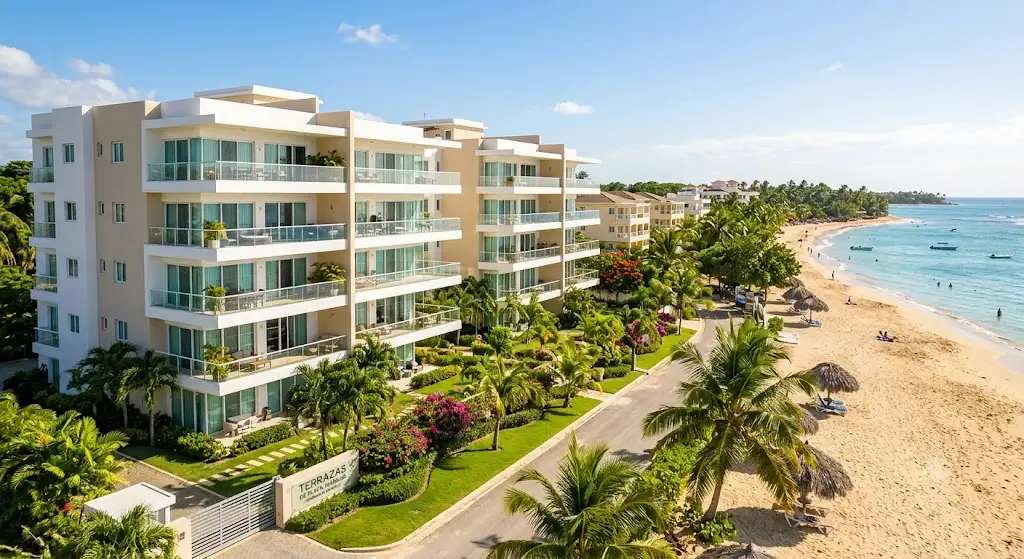
Always check the distance on a map instead of trusting the listing headline. Beaches in the Dominican Republic are also public by law. Law 305-68 keeps a 60-meter strip from the high-tide line as public domain, so a listing that promises a “private beach” usually means private access through a community.
Punta Cana and Bávaro
Punta Cana is where most buyers start, and for good reason. The official tourism site describes it as the country’s leading tourist destination, with around 50 kilometers of beaches. Its airport also handles most foreign visitors, with 72.6% of foreign non-resident air arrivals in January 2026.
Popular apartment areas include Bávaro, Los Corales, El Cortecito, Cana Bay, White Sands, and the communities near Cap Cana. Los Corales works well for short-term rentals because guests can walk to the beach and restaurants, while gated golf communities offer more privacy and higher fees. Our guide to how location and tourism shape Punta Cana prices explains why sellers price two similar apartments so differently.
Competition is the main thing to keep in mind. The area has a lot of new construction, so your unit will compete with many similar ones for guests and buyers. Ask about the monthly maintenance fee, the building’s rental rules, and what “beach access” really means before you make an offer.
See where each Punta Cana listing sits on the map, then compare prices and distance to the beach side by side.
Luxury Apartments in the Dominican Republic
If you are looking for luxury apartments in the Dominican Republic, most of the supply sits in a few places. Cap Cana leads the market, with a marina, golf courses, beach clubs, and gated security. Local agents report 2-bedroom units there from about US$380,000 to US$450,000. Cana Bay offers a resort-style setting near large hotels, and Santo Domingo has high-end towers in sectors such as Piantini and Naco for buyers who want city living.
Luxury buildings usually come with higher monthly fees, so add them to your budget early. They also tend to hold resale demand better, because buyers pay for security, management, and a recognized location. Our guide to the best places to invest in Dominican Republic property compares these communities in more detail.
Las Terrenas
Las Terrenas feels more like a small town than a resort zone. The official tourism site highlights its beaches, international culture, and restaurants, and much of it is walkable. Buyers often look around Playa Bonita, Las Ballenas, Punta Popy, Cosón, and the town center.
Many projects are small boutique buildings, and local agents report beachfront studios starting around US$189,000. The area suits remote workers, retirees, and lifestyle buyers who want cafés and the beach close together. Plan for seasonality, though. Owners describe busy winters and much quieter months the rest of the year, so budget rental income around the slow season.
Puerto Plata, Sosúa, and Cabarete
The north coast offers more variety at lower prices than Punta Cana. Puerto Plata has city services and beaches such as Playa Dorada. Sosúa has a large expat community and a calm bay. Cabarete draws surfers and kitesurfers, which keeps visitors coming when other beach towns slow down.
Rents here are among the most accessible on the coast. In Sosúa, owners advertise furnished apartments near the beach for about US$400 to US$750 a month with Wi-Fi and cable included, and one Cabarete owner listed a 2-bedroom at US$550 a month with electricity extra. Selling can take longer in some north coast areas, so check how long similar properties stay on the market before you buy.
Bayahibe and La Romana
Bayahibe and La Romana suit buyers who want clear water, diving, and a slower pace than Punta Cana. One Bayahibe project advertised studios from US$98,000, 1-bedroom units from US$133,000, and 2-bedroom units from US$177,000, about 1.5 kilometers from the beach. Check how lively the area feels outside the high season, and look closely at management and community rules.
Beaches Near Santo Domingo
If you work in the capital or want city services close by, Boca Chica and Juan Dolio give you beach access within roughly half an hour to an hour of Santo Domingo. Boca Chica sits close to Las Américas International Airport, and Juan Dolio offers beachfront towers further east. Weekend crowds and traffic vary a lot, so visit on both a weekday and a weekend. Our Santo Domingo real estate guide covers the city itself.
Buying Property in the Dominican Republic as a Foreigner
Foreigners can buy and hold titled property in their own name in the Dominican Republic. Most problems come from the paperwork, not from your nationality. Buyers report units sold to more than one person, titles delayed for years, and projects delivered late, so a few steps matter a lot.
- Hire your own independent lawyer to check the title and liens.
- Confirm whether CONFOTUR tax benefits apply to your unit, since they usually cover first purchases from the developer.
- Budget for the 3% transfer tax, legal fees, and furniture on top of the price.
- Run the numbers early if you plan to finance, using our guide to calculating mortgage payments in the Dominican Republic.
Our full guide to buying property in the Dominican Republic walks through each step, from reservation to registration.
Understanding Metros Cuadrados in Listings
Dominican listings show size in metros cuadrados, written as m². One square meter equals about 10.76 square feet, so an 80 m² apartment is roughly 860 square feet and a 120 m² apartment is close to 1,290 square feet.
Price per square meter helps you compare apartments fairly. A US$150,000 apartment with 75 m² costs about US$2,000 per m², while a US$180,000 unit with 100 m² costs US$1,800 per m². Ask whether the listed area includes balconies, terraces, or parking, because some listings count those spaces in the total.
Want to Rent Before You Buy?
Many experienced buyers rent first. A few months in an area shows you the noise, the traffic, the slow season, and how the building really works. Renting is also simpler than many people expect.
- Requirements. Landlords mainly ask for proof of income and a copy of your passport. Income from remote work or a business abroad usually counts. Some landlords ask for a local guarantor, known as a fiador.
- Deposits. For residential leases, Law 85-25 caps the security deposit at two months of rent. Stays of 90 days or less count as tourist rentals and follow different rules.
- Lease length. Six-month and twelve-month leases are common, and furnished monthly rentals are easy to find in beach towns.
- What the rent covers. Many beach rentals exclude electricity, and air conditioning can push that bill up fast. Ask about Wi-Fi, gas, water, and backup power before you sign.
- Where to search. Roof360, SuperCasas, Corotos, and local Facebook groups all carry rentals, and many owners still post “Se Alquila” signs on buildings. Never pay a deposit before you view the apartment and confirm who owns it.
Rent listed in pesos is often easier to compare than rent listed in dollars, so check both when you can. Bring a Spanish speaker to viewings if you are not fluent. For a full viewing checklist, read our guide on what to look for in apartments for rent in the Dominican Republic, and families can use our tips for finding apartments for rent for a family.
Testing an area first? Compare beach-area rentals by price and location before you book a viewing.
What to Check Before You Contact a Seller
A good listing already answers most of these questions. If it does not, ask before you schedule a viewing.
- The exact map location and the real walking or driving time to the beach
- The size in metros cuadrados and what the total includes
- The monthly maintenance or HOA fee
- Parking, furniture, and appliances included in the price
- Backup power, water storage, and internet options
- Rental rules and any building restrictions
- Title status, or the developer’s delivery date for new projects
- Nearby supermarkets, clinics, and main roads
Beach property also costs more to maintain. Salt air wears down metal fixtures and air conditioners, humidity affects walls and furniture, and coastal electricity bills run high when the AC stays on. If you plan to rent the unit out, our analysis of real estate investment ROI in the Dominican Republic shows how these costs change your return.
Match the Area to Your Goal
| Your Goal | Areas to Look At First |
|---|---|
| Short-term rental income | Punta Cana, Bávaro, Los Corales |
| Luxury and security | Cap Cana, Cana Bay, Piantini in Santo Domingo |
| Walkable beach life | Las Terrenas, Sosúa, parts of Bávaro |
| Water sports | Cabarete |
| A quieter pace | Bayahibe, La Romana |
| Beach near the capital | Boca Chica, Juan Dolio |
If your budget is tighter, our list of cheap houses for sale in the Dominican Republic covers lower-cost options inland and in smaller towns.
Choose the Apartment That Fits How You Will Use It
The best beach apartment balances location, beach access, building quality, clean documents, monthly costs, and demand from future buyers or guests. Start with the area, then compare the exact street and building, and only then look at the finishes.
Roof360 shows each listing on a map with its price and details, so you can compare coastal apartments side by side and contact the owner or agent directly when one fits your plan.